PopWheels Economic Impact Report 2026
Powering the Delivery Economy
Click here if you would like the one-pager report.
New York City’s delivery workforce depends on e-bikes to complete thousands of trips across the city each day. For many workers, keeping those bikes powered means carrying heavy lithium-ion batteries home, waiting hours for them to recharge, and purchasing additional batteries that could cause battery fires.
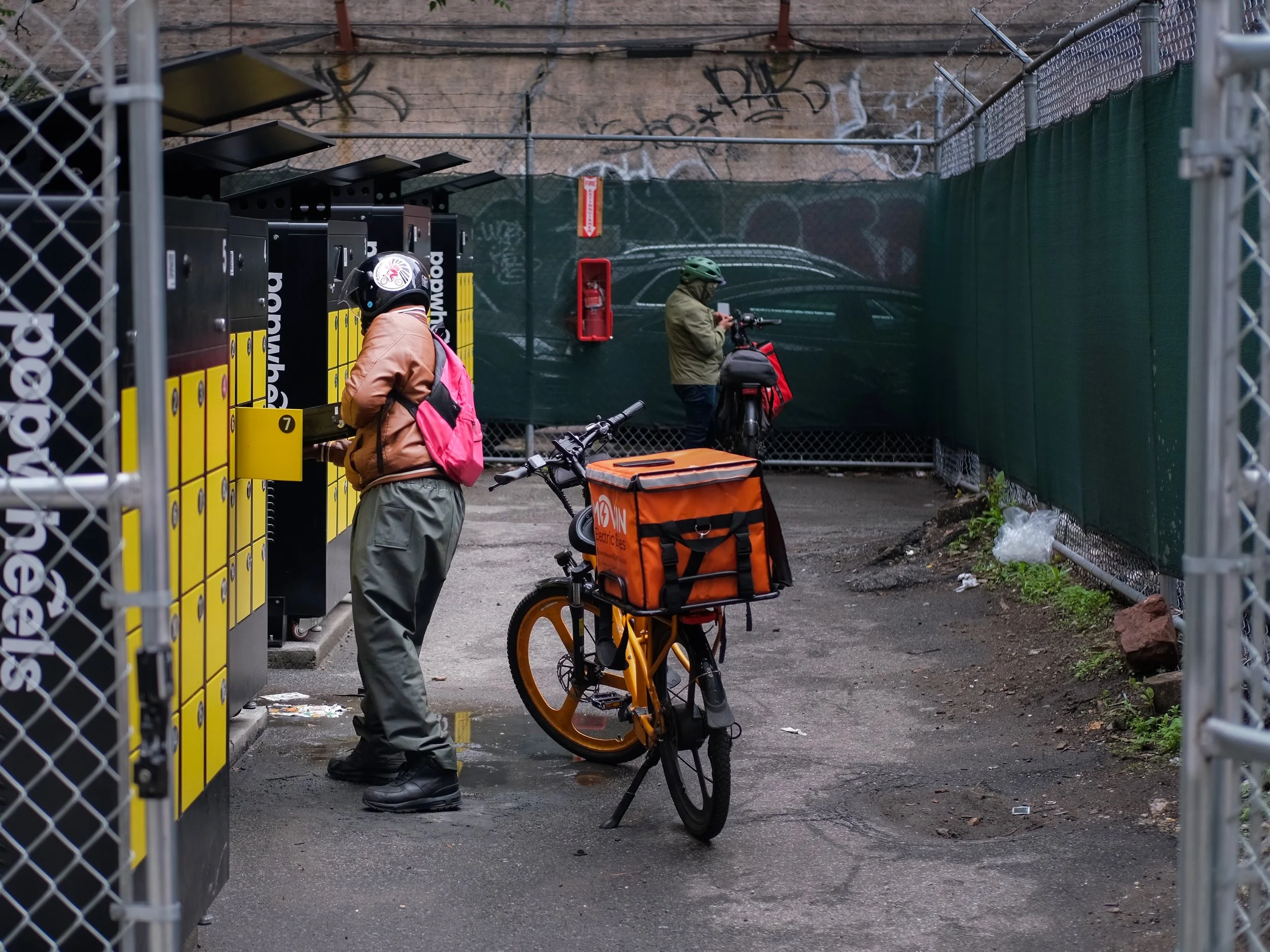
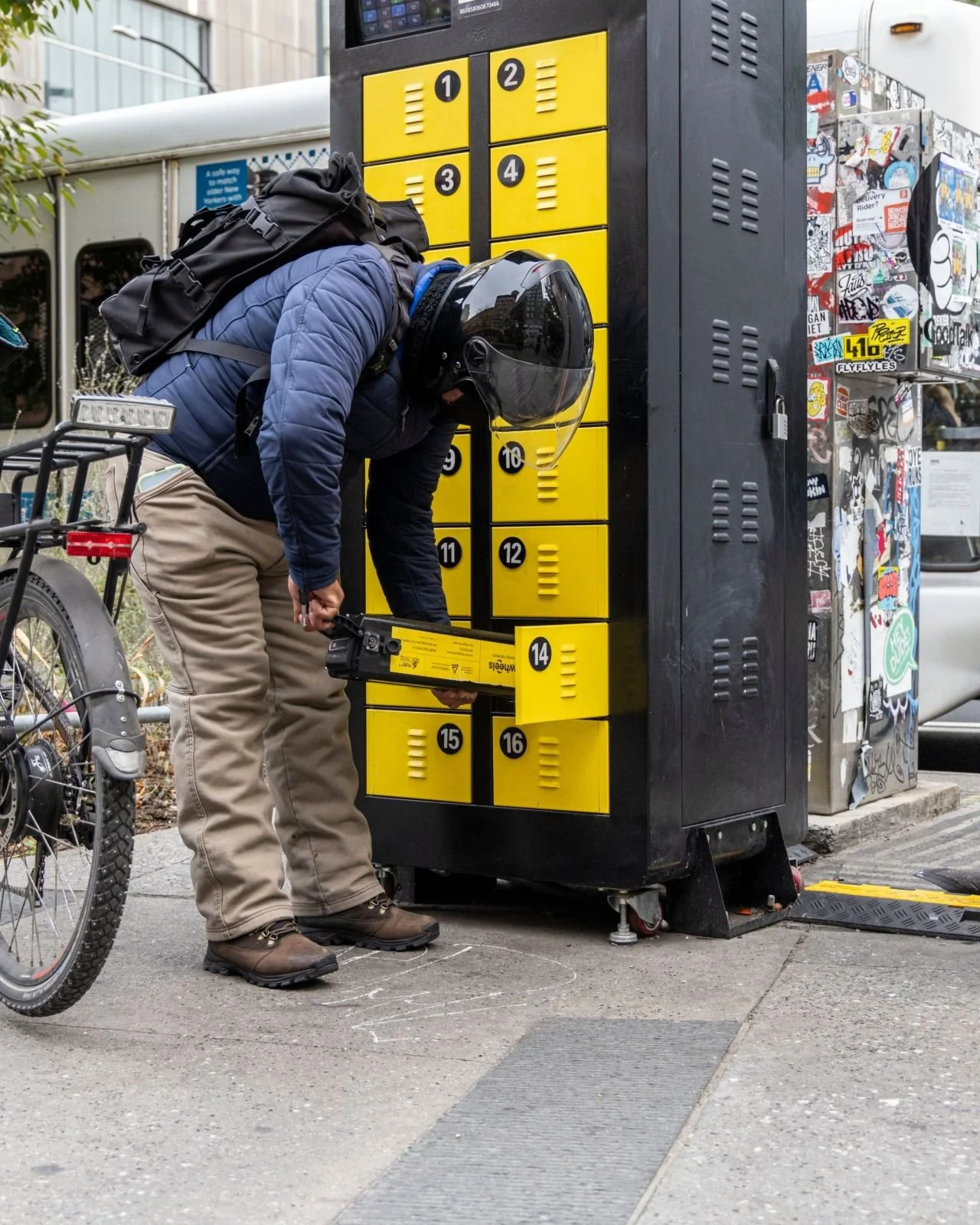
PopWheels provides delivery workers a safer, more affordable approach, with 24/7 access to charged certified, professionally-managed batteries across a network of automated swapping stations. This system allows workers to swap a depleted battery for a fully charged one in seconds and immediately get back on the road.
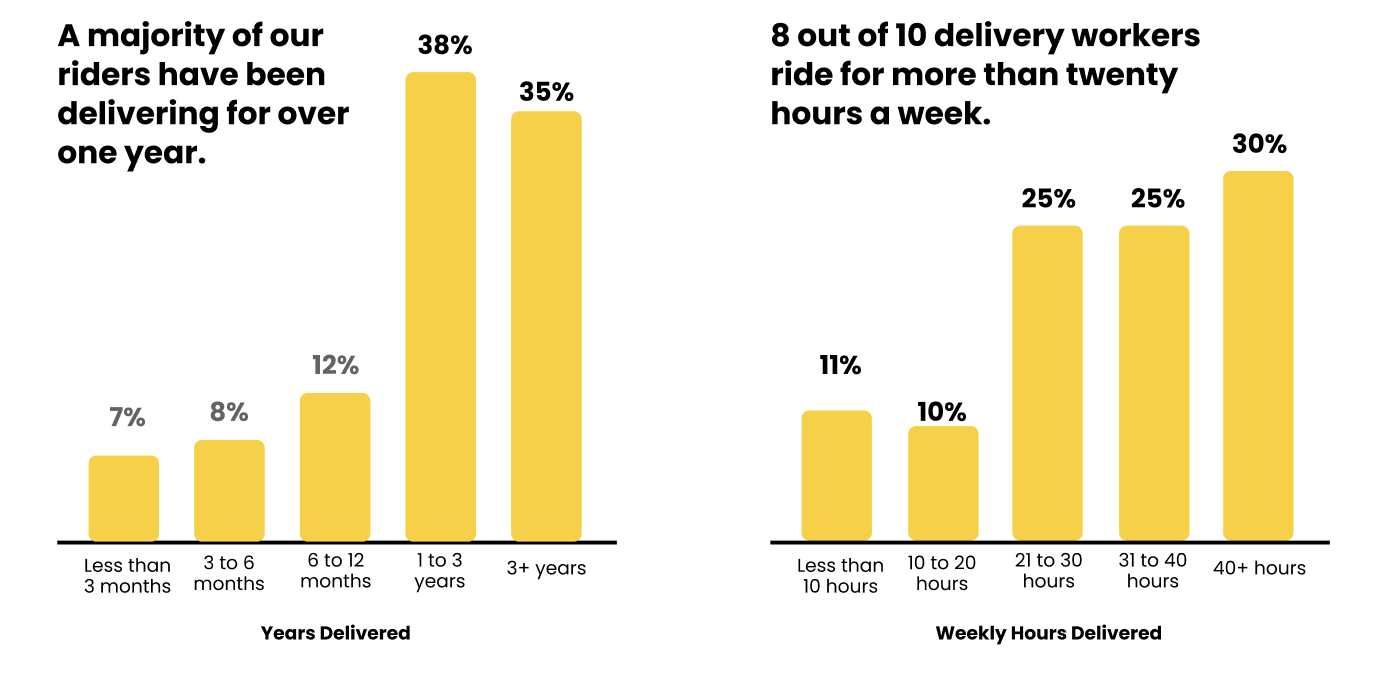
To better understand how this infrastructure affects riders’ work, PopWheels surveyed 133 delivery workers in July 2026 about their charging habits, safety concerns, time, costs, earnings, and experience using the service. For many, delivery work is their full-time livelihood. 73% of our riders have been delivering for over a year and 80% of them delivering for more than twenty hours a week.
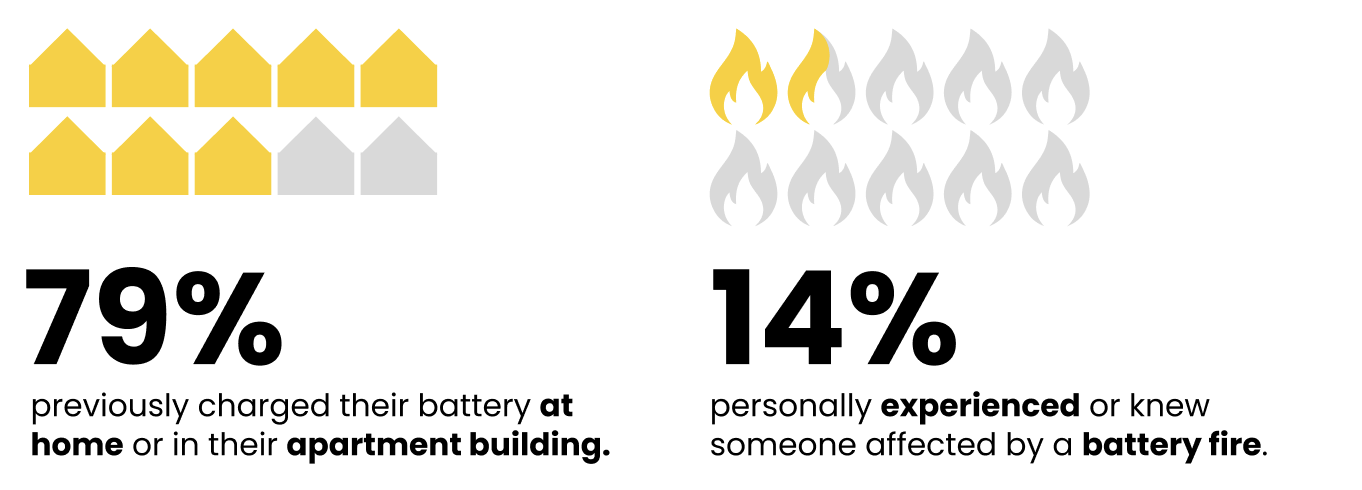
Before joining PopWheels, 79% of respondents charged batteries at home or in their apartment building, while 14% reported personally experienced or knew someone who experienced a battery fire. By providing an alternative to home charging, battery swapping with PopWheels can reduce the need to carry and store batteries in residential buildings, while giving workers reliable access to power throughout the day.
Our riders also reported meaningful time and economic benefits when using PopWheels. Without charging downtime, 44% saved at least three hours each week, including 21% who saved five to ten hours and 8% who saved more than ten hours. 74% reported spending less or the same on batteries, with estimated average savings of $91 per month. 85% also reported earning more, with estimated average additional earnings of $64 per week. For workers experiencing both benefits, that could represent about $4,000 in additional earnings and savings in a year.
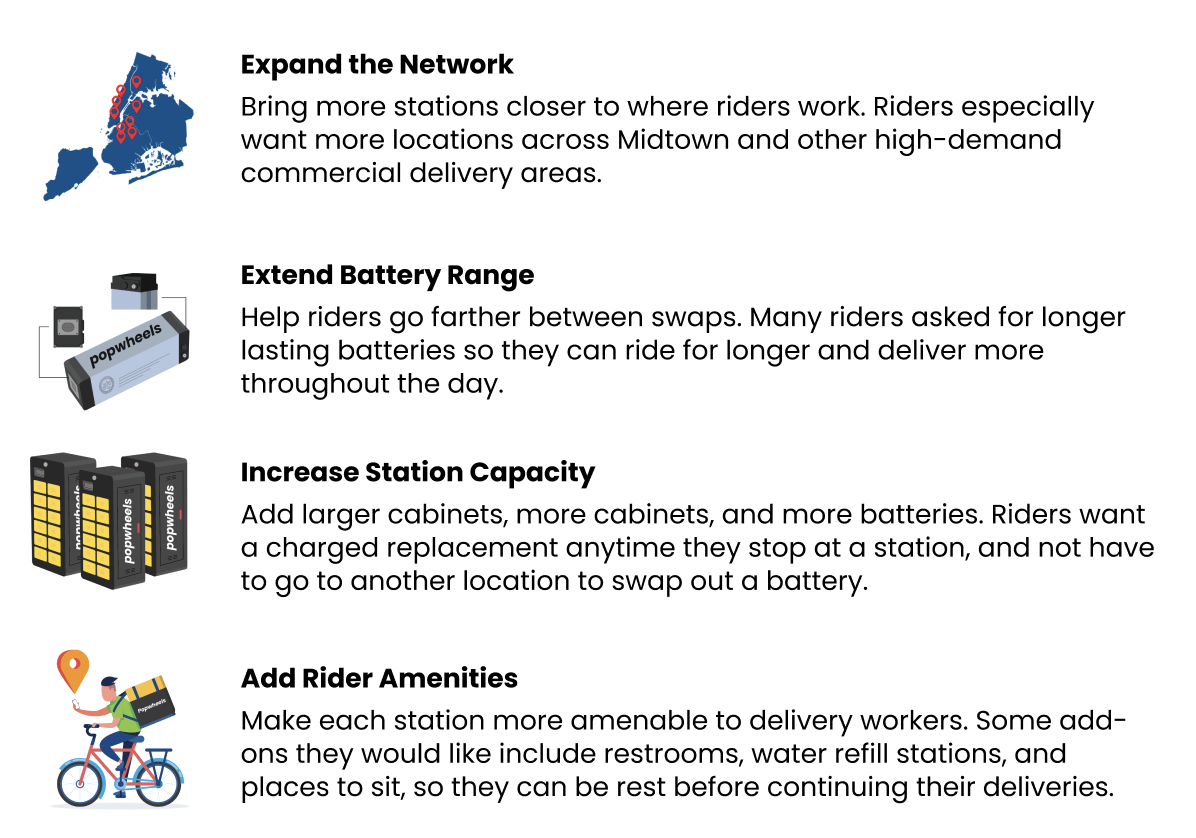
Our riders choose PopWheels because of safety, word of mouth, and dependable access to batteries. They continue to use us because of our battery duration, affordability, customer service, and the 24/7 uptime. Their feedback also points toward our next stage of growth: more stations near high-demand delivery areas, longer-lasting batteries, larger cabinets with greater battery capacity, and stations with amenities designed around the delivery workday.
Together, these findings prove that reliable battery-swapping infrastructure does more than eliminate convenience. It supports a safer, more reliable, more effective, and more affordable delivery economy, giving workers greater flexibility over where and how they work.
Our Riders
Every day, thousands of delivery workers keep New York City moving. They deliver meals across every borough, in every season, often working long hours to earn a living. Yet despite their essential role in the city's economy, the daily realities of their work — from charging batteries to staying on the road — are rarely seen.
To better understand those experiences, PopWheels surveyed our delivery workers across NYC. The findings provide a snapshot of who today's delivery workers are, how they work, and how battery swapping is shaping their daily routines.
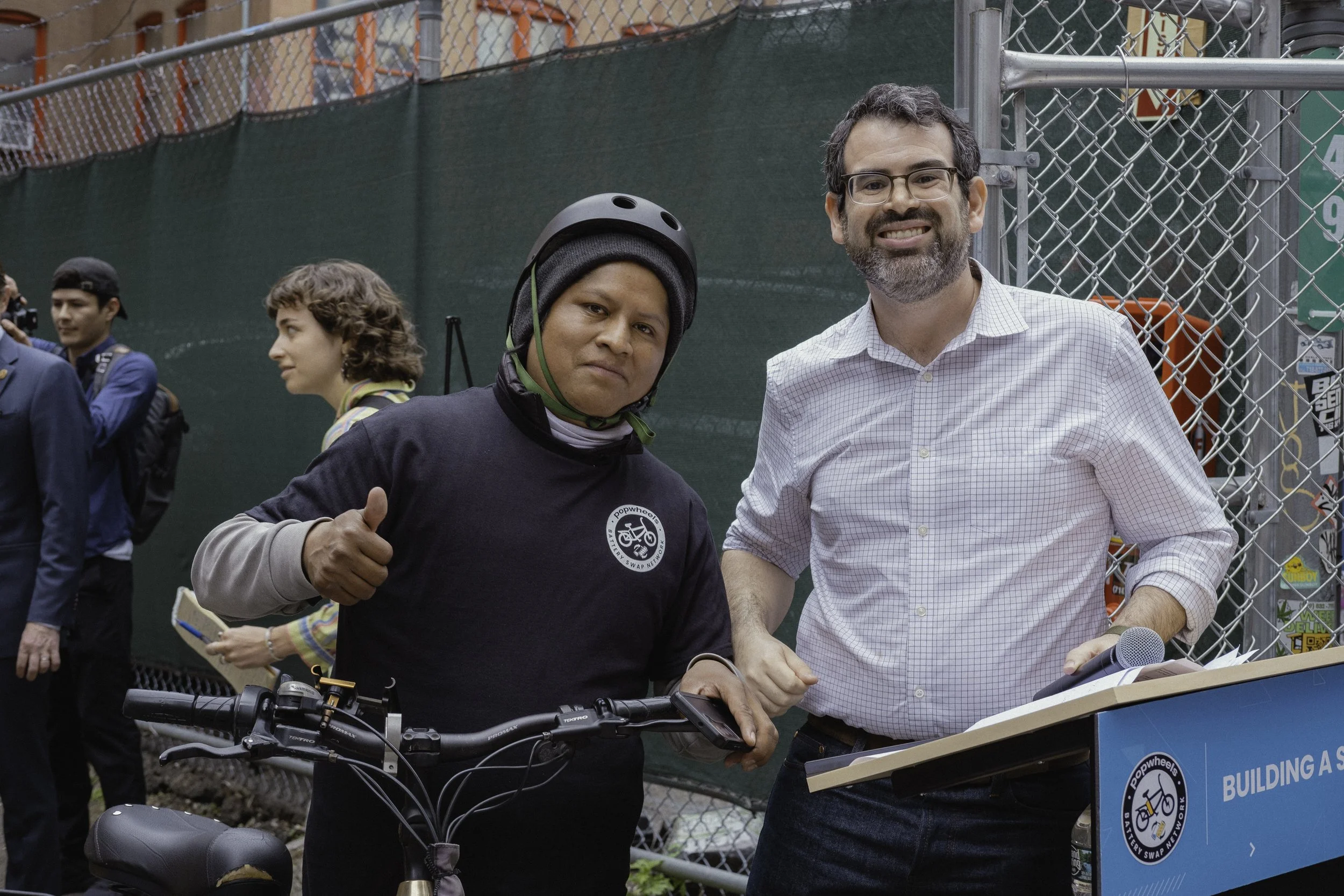
Delivery work is a full-time livelihood for many riders of our riders.
A Hidden Cost
Every delivery starts with a charged battery. But for many NYC delivery workers, keeping an e-bike powered often means charging multiple heavy lithium-ion batteries at home and in residential apartment buildings. Waiting hours for batteries to recharge means planning work schedules around battery availability. These routines affect not only how long workers stay on the road, but also where batteries are stored and how workers think about safety.
As lithium-ion battery fires have also become an increasing public safety concern in NYC, charging at home should no longer be the default. For many delivery workers, finding a safe, reliable way to keep charnging, and thus working, is essential.
Home charging puts both riders and homes at risk.

What made riders join
Battery safety
Recommendations
Reliability
Speed
133 delivery workers surveyed across English, Spanish, French, Bengali
7+ delivery apps that our delivery riders work for
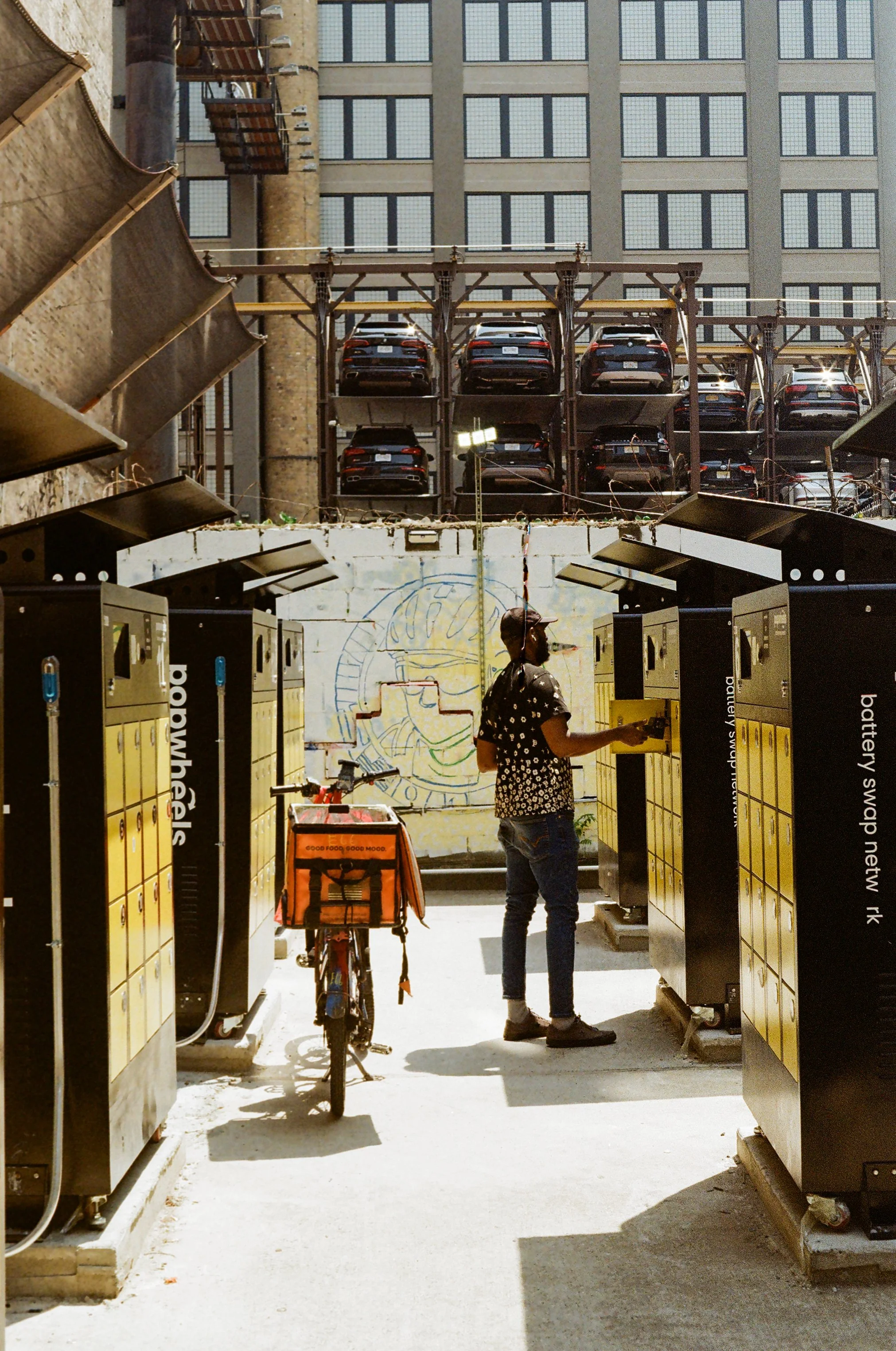
“[With PopWheels], I no longer have to go home every time my battery runs out, and I don't have to worry about a fire while charging.”
— PopWheels swapper, since April 2026
Across our swapping network, PopWheels can provide $4k in average annual economic benefit to delivery workers¹.
74% spent the same or less on battery costs, saving on average $91 monthly.
85% earned more delivering, earning on average $64 a week.
¹Annualized from average reported $1K in annual battery savings and additional $3K in annual earnings among respondents.
Why Riders Choose PopWheels
Cost and convenience may bring workers to battery swapping, but the day-to-day experience we provide convinces riders to continue using PopWheels.
Our riders tell us that they chose to use our service because of we provide safe, reliable batteries, at efficient stations. They heard about PopWheels from friends and word of mouth. Once they started using the our service, they keep charging with us because of how long our batteries last for, our affordable price, our excellent customer service, and the size of our network.
What made riders stay
Battery duration
Price
Customer service
Network size
“The advantage I have is that I don't work those extra hours anymore, and I don't have to lug batteries home—they’re heavy, and charging them at home is risky.”
— PopWheels swapper since May 2026
What Riders Want Next
Our riders have shared a lot of feedback about how to improve the experience, and we have our work cut out for us. As PopWheels grows, we'll continue expanding the network, improving our hardware, and investing in the tools riders need to make battery swapping faster, more reliable, and more accessible across NYC.